Flora
Fauna
Endangered


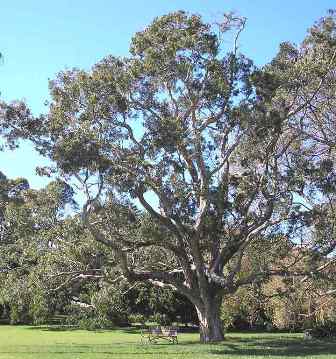
African wild plum
(Harpephyllum caffrum)
The wild plum is a large, evergreen tree that grows up to 15 m tall, and is usually found in riverine forests. The main stem is clean and straight, but the forest form often has supporting buttress roots. The bark is smooth when young, becoming rough, dark grey-brown as it grows older. Branches are curved bowed upwards, with leaves crowded towards the ends, forming a thick crown at the top of the tree.
The shiny dark green and glossy leaves are pinnate with sickle-shaped leaflets, and are som... [more]
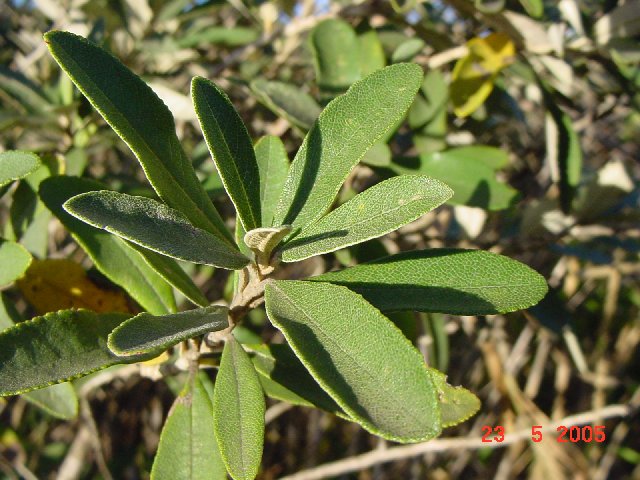
Camphor Bush
(Tarconanthus camphorates)
Tarchonanthus camphoratus (known as Camphor Bush for its scent, or Leleshwa in Kenya), is a shrub or small tree, native to eastern and Southern Africa and Arabia.
The Camphor Bush can reach up to 6 meters in height. The twigs and younger stems are white-felted, as are the undersides of the leaves. The upper leaf surface is dark olive-green. Tarchonanthus camphoratus is dioecious. Flowers are usually present from December to May (in South Africa), with cream colored panicles on a discoid head. M... [more]
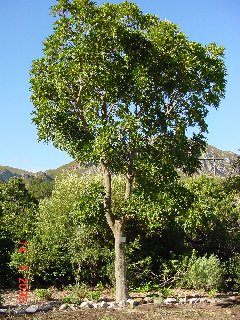
Cape Ash
(Ekebergia capensis)
Ekebergia capensis is a tree in the Meliaceae family. It is commonly known as the Cape Ash. Its range extends from the Eastern Cape of South Africa to Sudan and Ethiopia.
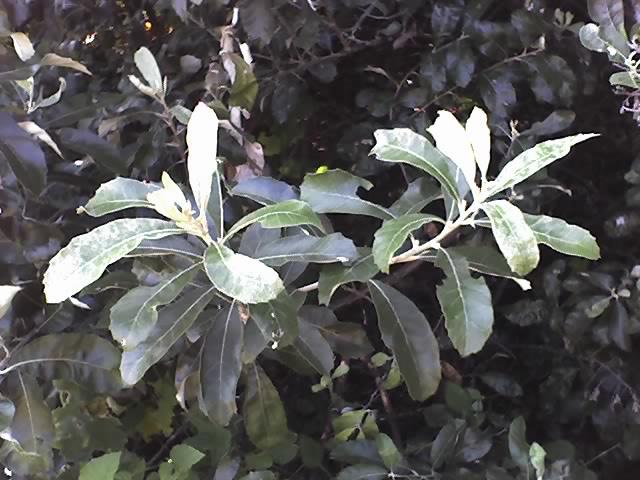
Coastal Silver Oak
(Brachylaena discolour)
Brachylaena discolor is a species of tree in the Asteraceae family. Two varieties are known; var. discolor is commonly known as the Coast Silver Oak or Coastal Silver Oak, and var. transvaalensis is commonly known as the Forest Silver Oak or Natal Silver Oak. These trees are distributed from the Eastern Cape to Mpumalanga in South Africa and into southern Mosambique, but are most common in the coastal vegetation of KwaZulu-Natal.
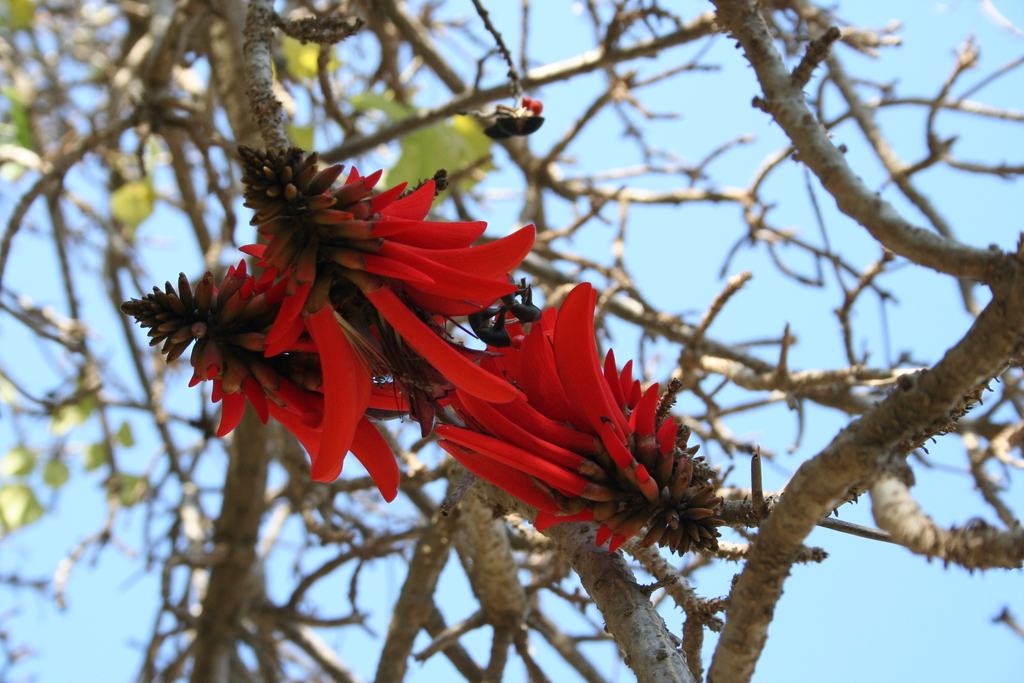
Coral Tree
(Erythrina lysistemon)
Erythrina lysistemon is a species of deciduous tree in the pea family, Fabaceae, that is native to South Africa. Common names include Common Coral Tree, Lucky Bean Tree, Kaffir Boom, Transvaal Kafferboom, Umsintsi (Xhosa), Muvhale (Venda), Mophete (Tswana), Kanniedood (Afrikaans), Mokhungwane (Sotho) and Umsinsi (Zulu). It is regularly cultivated as a tree for gardens and parks.
Common Coral Tree reaches 30 to 40 ft (9.1 to 12 m) in height, with smooth grayish bark, not corky; hooked prickles s... [more]
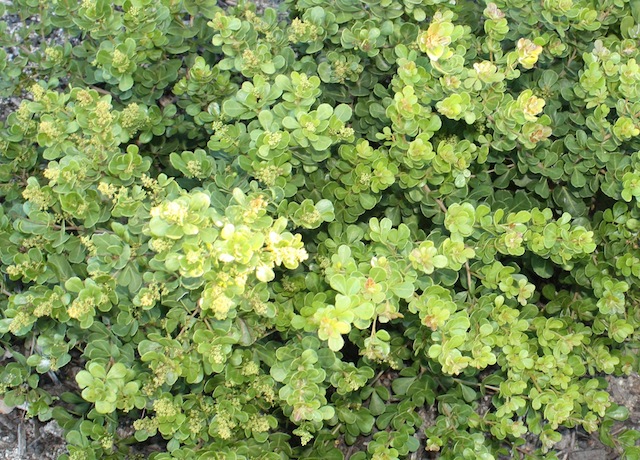
Dune Crow-Berry
(Rhus crenata)
Rhus crenata (Dune Crow-berry) is a species of Rhus native to South Africa, where it occurs in frost-free and light frost areas.
It is a multibranched evergreen shrub or small tree, reaching a height of 3 metres and a similar spread. It enjoys full sun and is semi frost hardy. The small flowers are produced in autumn, and are followed by dark blue fruit eaten by birds. The tree is a good subject for bonsai, and can easily be pruned into a very neat hedge.
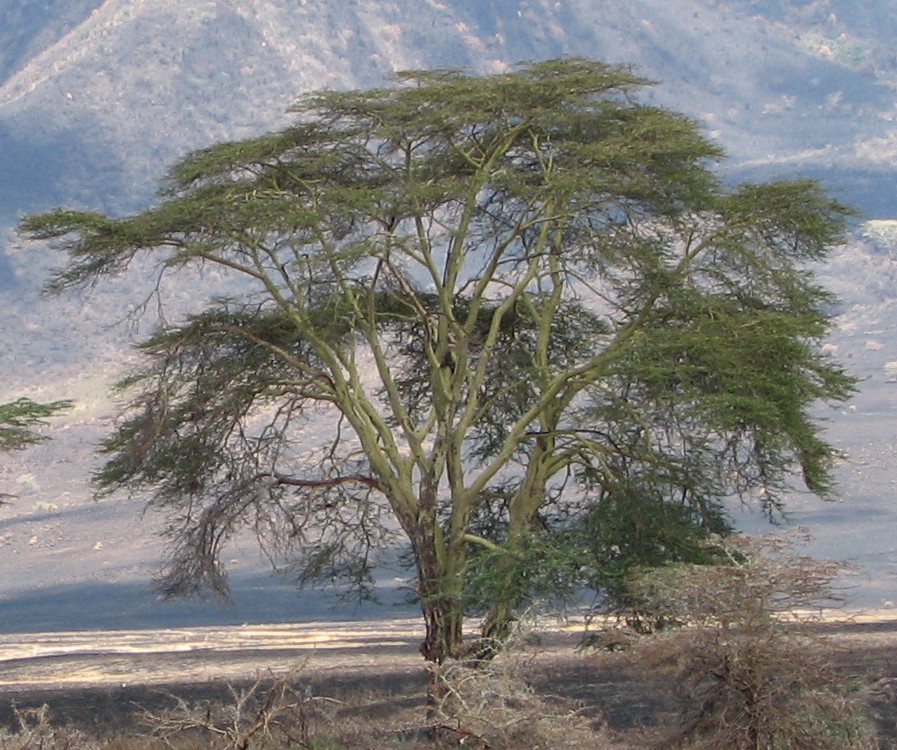
Fever Tree
(Acacia xanthophloea)
Acacia xanthophloea is a tree in the Fabaceae family and is commonly known in English as the Fever Tree (local East African names include Olerai, Kimwea, Murera, and Mwelele). This species of Acacia is native to eastern and southern Africa. It can be found in Botswana, Kenya, Malawi, Mozambique, Somalia, South Africa, Swaziland, Tanzania, Zambia and Zimbabwe. It has also become a landscape tree in other warm climates, outside of its natural range.
The trees grow to a height of 15–25 m. The ch... [more]
Natal Fig
(Ficus natalensis)
Ficus natalensis is a tree in the Moraceae family. It is commonly known as the Natal Fig. These trees are distributed from KwaZulu-Natal in South Africa to east Africa.
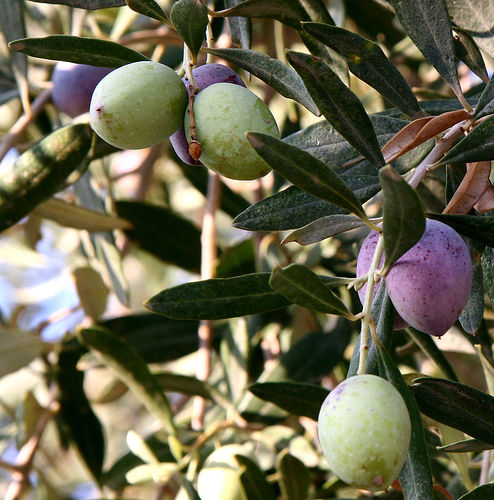
Olive
(Olea europaea)
The olive tree is an evergreen tree or shrub native to the Mediterranean, Asia and Africa. It is short and squat, and rarely exceeds 8–15 metres (26–49 ft) in height. The silvery green leaves are oblong in shape, measuring 4–10 centimetres (1.6–3.9 in) long and 1–3 centimetres (0.39–1.2 in) wide. The trunk is typically gnarled and twisted.
Olives are commonly mistaken for fruit, but are however vegetables.
The small white, feathery flowers, with ten-cleft calyx and corolla, two sta... [more]
Port Jackson Fig
(Ficus rubignosa)
Ficus rubiginosa, the Rusty Fig, Port Jackson Fig, or Little-leaf Fig, is a tree in the family Moraceae that is native to eastern Australia. It is a banyan of the genus Ficus which contains around 750 species worldwide in warm climates, including the edible fig (Ficus carica).
Ficus rubiginosa forms a spreading densely shading tree when mature, and may reach 30 m (100 ft) in height, although it rarely exceeds 10 m (30 ft) in the Sydney region. The trunk is buttressed and can reach 1.5 m (5 ft) i... [more]
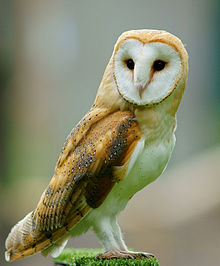
Barn Owl
(Tyto alba)
The Barn Owl (Tyto alba) is the most widely distributed species of owl, and one of the most widespread of all birds.
The Barn Owl is a pale, long-winged, long-legged owl with a short squarish tail. Generally a medium-sized owl, there is considerable size variation across the subspecies. The Barn Owl measures about 25–50 cm in overall length, with a wingspan of some 75–110 cm. Adult body mass is also variable, ranging from 187 to 800 g, with the owls closer to the tropics being genera... [more]
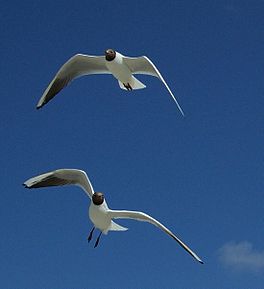
Black-headed Gull
(Chroicocephalus ridibundus)
The Black-headed Gull (Chroicocephalus ridibundus) is a small gull which breeds in colonies in large reedbeds or marshes, or on islands in lakes, nesting on the ground. Like most gulls, it is highly gregarious in winter, both when feeding or in evening roosts. It is not a pelagic species and is rarely seen at sea far from coasts.
The Black-headed Gull is a bold and opportunist feeder and will eat insects, fish, seeds, worms, scraps and carrion in towns, or take invertebrates in ploughed fields... [more]
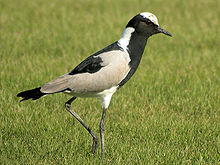
Blacksmith Lapwing
(Vanellus armatus)
The Blacksmith Lapwing or Blacksmith Plover (Vanellus armatus) occurs commonly from Kenya through central Tanzania to southern and southwestern Africa. The vernacular name derives from the repeated metallic 'tink, tink, tink' alarm call, which suggests a blacksmith's hammer striking an anvil.
Blacksmith Lapwings are very boldly patterned in black, grey and white, possibly warning colours to predators. It is one of five lapwing species (two African, one Asian and two Neotropical) that share the ... [more]
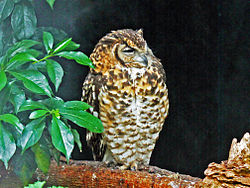
Cape eagle-owl
(Bubo capensis)
The Cape eagle-owl (Bubo capensis) is a species of owl in the Strigidae family. It is one several large species of the eagle-owl genus,Bubo.
The Cape eagle-owl is predominantly found in mountainous regions and hilly areas with rocks. Rocky gorges excavated by rivers and adjacent wood gulleys may also hold them. They prefer a scattering of vegetative coverage, which they may use for roosting or concealment during nightly hunts, though they predominantly breed, roost and hunt on rocks. They ... [more]
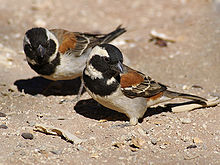
Cape Sparrow
(Passer melanurus)
The Cape Sparrow or Mossie (Passer melanurus) is a species of passerine bird in the sparrow family. Brightly coloured and distinctive, it is coloured grey, brown, and chestnut, with some black and white markings on the male. It is found in southern Africa, where it inhabits savanna, cultivated areas, and towns.
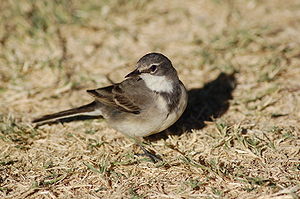
Cape Wagtail
(Motacilla capensis)
The Cape Wagtail (Motacilla capensis) is a small passerine bird in the family Motacillidae, which includes the wagtails, pipits and longclaws.
This species breeds in much of Africa from eastern Zaire and Angola across to Kenya and south to the Cape in South Africa. This is an insectivorous bird of open country, often near habitation and water. It prefers bare areas or short grass for feeding, where it can see and pursue its prey. In urban areas it has adapted to foraging in gardens or paved are... [more]
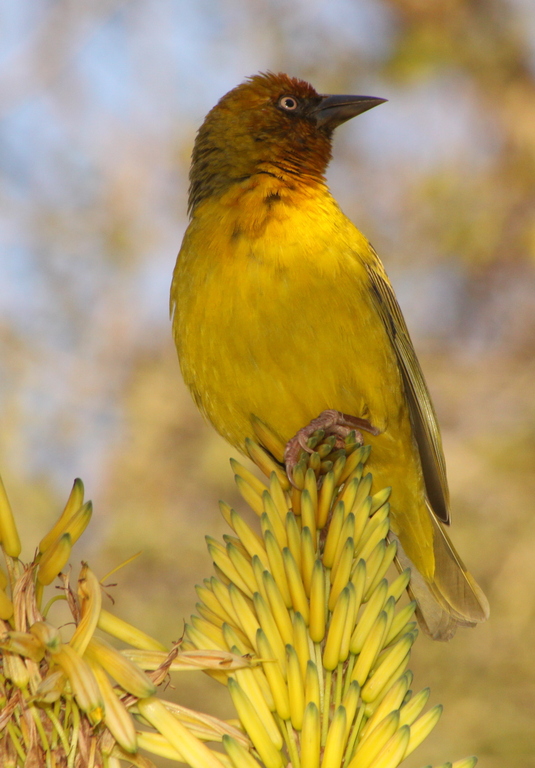
Cape Weaver
(Ploceus Capensis)
The Cape Weaver (Ploceus capensis) is a resident breeding bird species endemic to South Africa.
This common species occurs in grassland, agricultural and fynbos habitats, often near rivers. In breeds in noisy colonies in trees (often willows or Eucalyptus, rarely palms) and reedbeds.
This weaver builds a large coarsely woven nest made of grass and leaf strips with a downward facing entrance which is suspended from a branch or reed. The Hadada Ibis will sometimes nest in the weaver colonies. Th... [more]
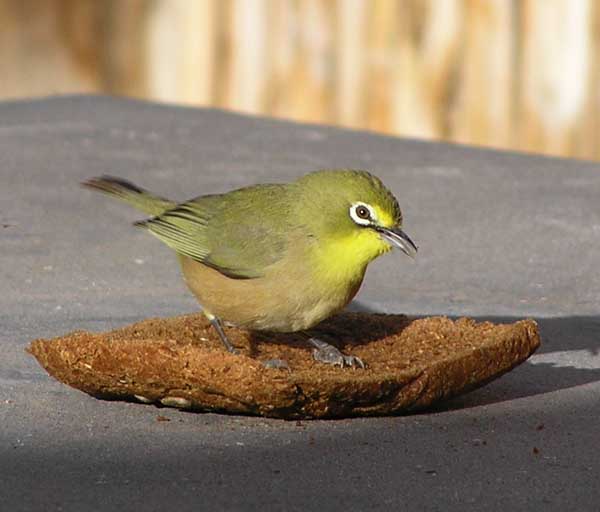
Cape White-eye
(Zosterops pallidus)
The Cape White-eye, Zosterops pallidus, is a small passerine bird in the white-eye family. It is native to southern Africa.
here are six subspecies. Traditionally, the western nominate group and the eastern capensis group have been treated as separate species; the Orange River White-eye (Z. pallidus) and the Cape White-eye (Z. capensis). The latter can be further divided into two subgroups, the south-western capensis subgroup and the eastern virens subgroup (the so-called Green White-eye). All s... [more]
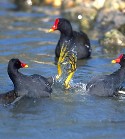
Common Moorhen
(Gallinula chloropus)
The Common Moorhen (Gallinula chloropus) is a bird in the Rallidae family with an almost worldwide distribution.
The Moorhen is a distinctive species, with dark plumage apart from the white undertail, yellow legs and a red facial shield. The young are browner and lack the red shield. It has a wide range of gargling calls and will emit loud hisses when threatened.
This is a common breeding bird in marsh environments and well-vegetated lakes. Populations in areas where the waters freeze, such as s... [more]
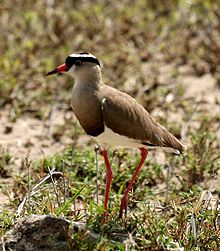
Crowned Lapwing
(Vanellus coronatus)
The Crowned Lapwing (Vanellus coronatus), also known as the Crowned Plover, is a bird of the lapwing subfamily that occurs contiguously from the Red Sea coast of Somalia to southern and southwestern Africa. It is an adaptable and numerous species, with bold and noisy habits. It is related to the more localized Black-winged and Senegal Lapwings, with which it shares some plumage characteristics.
The Crowned Lapwing is easily recognized by its combination of brown and white colours, with most tel... [more]